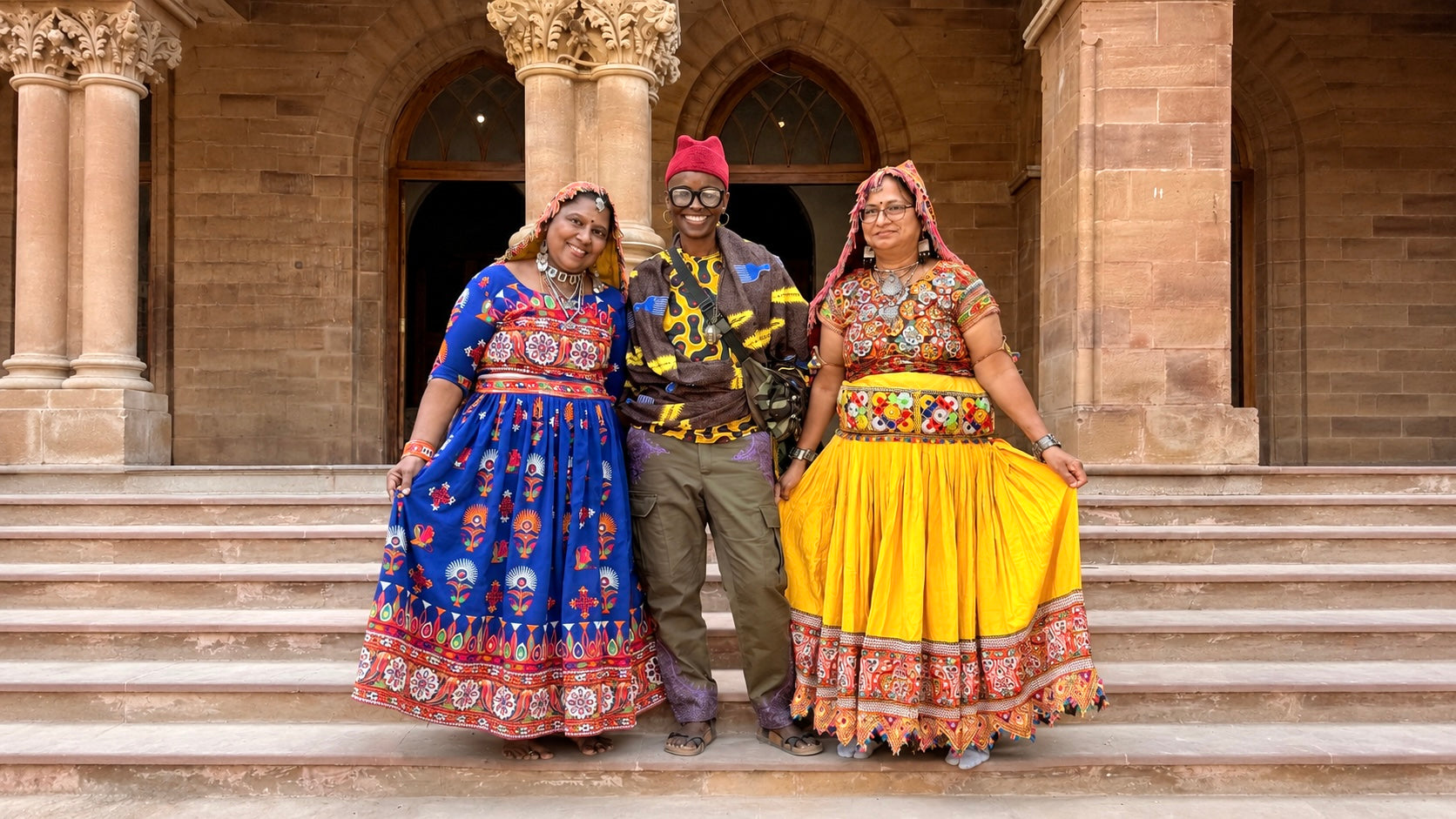


Cloth Carries Memory

My grandmother was a tailor in Ondo, Nigeria.
Long before I understood fashion, I watched her transform cloth into something meaningful.
She never treated fabric as something disposable.
It was cherished.
Repaired.
Passed from one generation to the next.
Worn for celebrations, then carefully folded away until it was needed again.
Without realizing it, she taught me my first lesson in sustainability.
Today, we live in a world where clothing is often made to be consumed quickly—worn for a season, then forgotten.
I’ve never believed that was how clothing should be.
Every vintage sari I discover has already lived a life.
It has celebrated weddings and festivals, marked everyday moments, and been cared for by hands I’ll never know.
I don’t see old fabric.
I see a story waiting to continue.
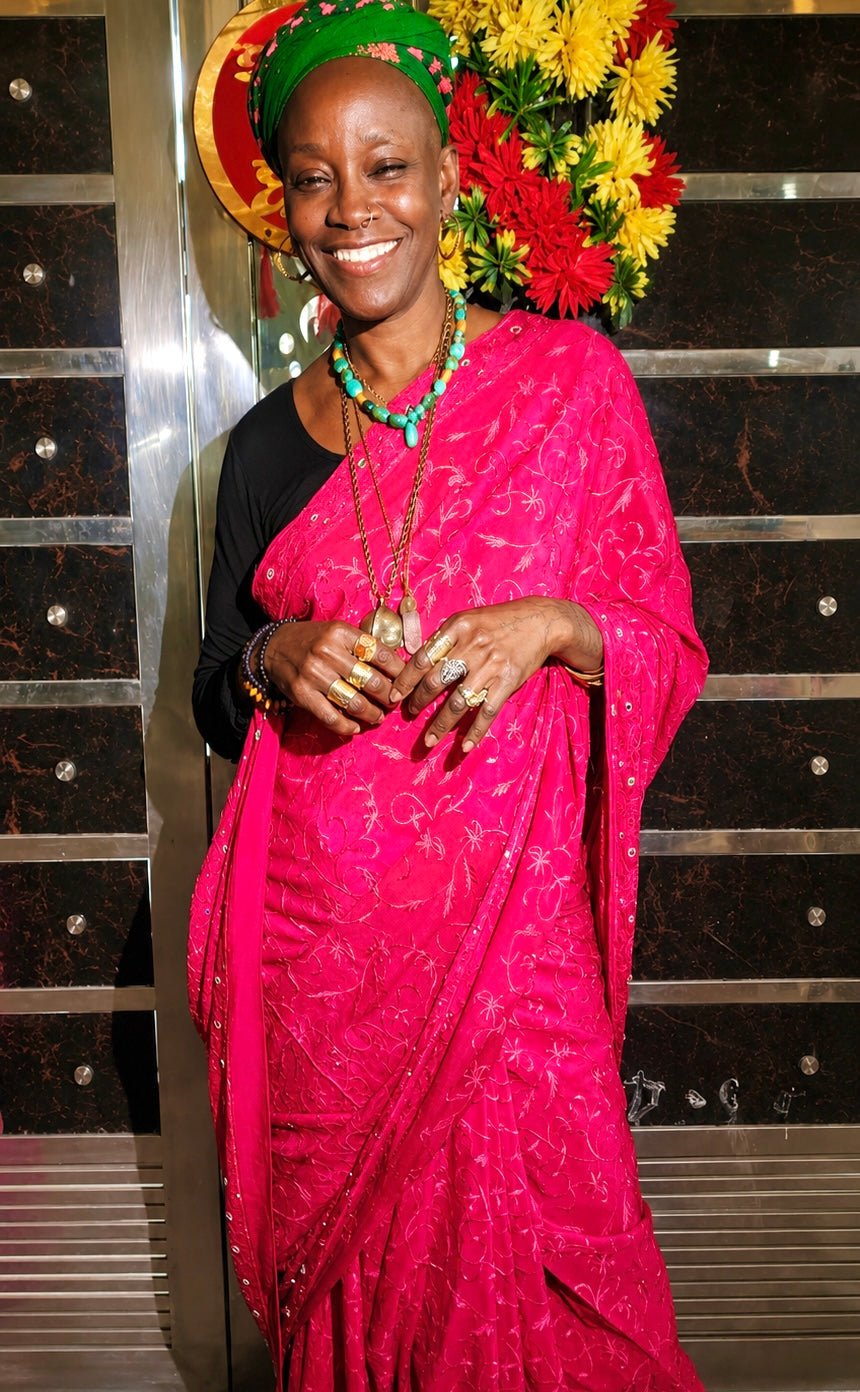
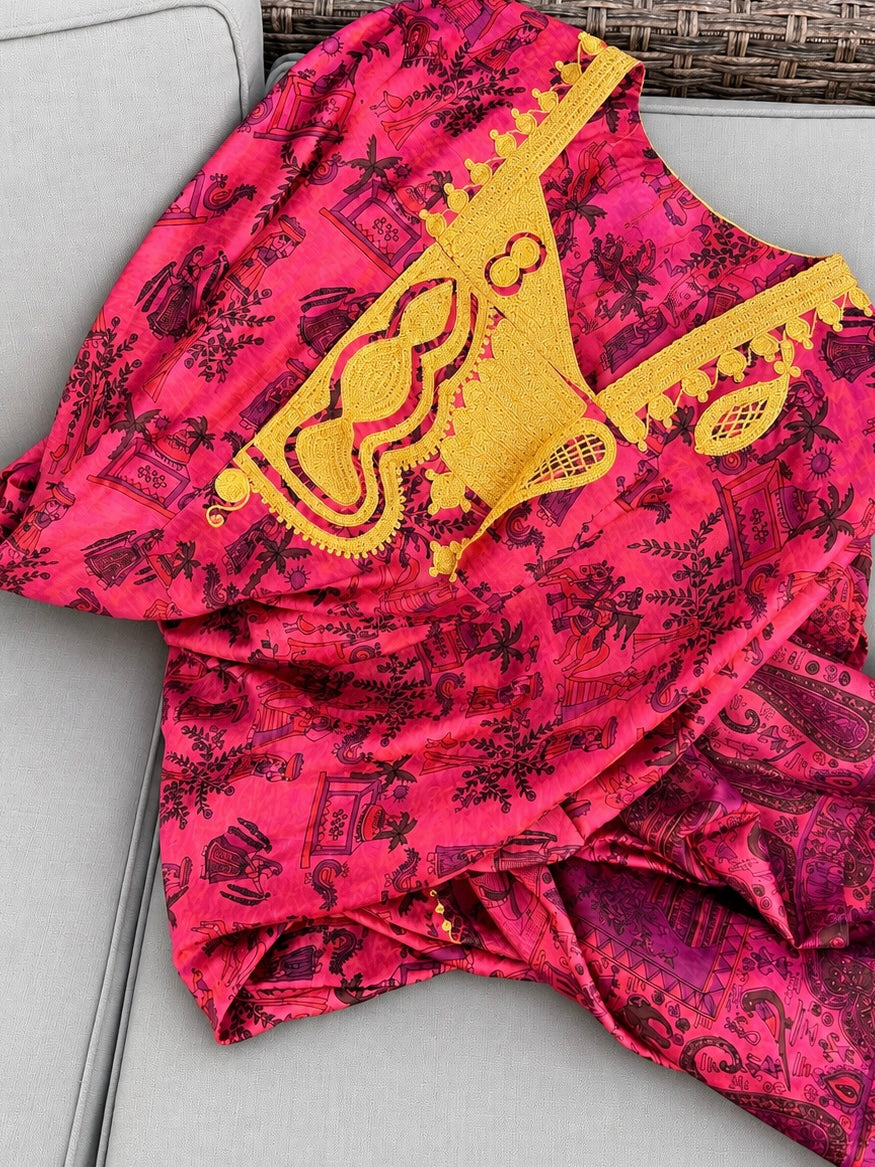
Rather than erase its past, I pair it with embroidery that carries a story of its own—motifs inspired by my late father’s ceremonial agbada, symbols of family, heritage, and celebration. Together, they create a conversation between cultures, bringing new joy and meaning to each sari kaftan.
To me, sustainability isn’t simply about reusing materials.
It’s about preserving memory.
Respecting the hands that wove the cloth. Honoring the traditions that shaped it. And allowing its story to continue in a new form.
Because cloth is never just cloth.
It carries history.
It carries culture.
It carries love.
And with every piece I create, another story begins.